Faxaflói Bay species and observation limits
Faxaflói Bay whale watching focuses on humpback whales, minke whales, white-beaked dolphins and harbour porpoises. These are the regularly advertised species for departures from Reykjavik's Old Harbour. Treat the list as an introduction to the animals guides may encounter, rather than a checklist that a single trip will complete. A boat ticket buys an outing to observe wildlife, with the animals determining the encounter.
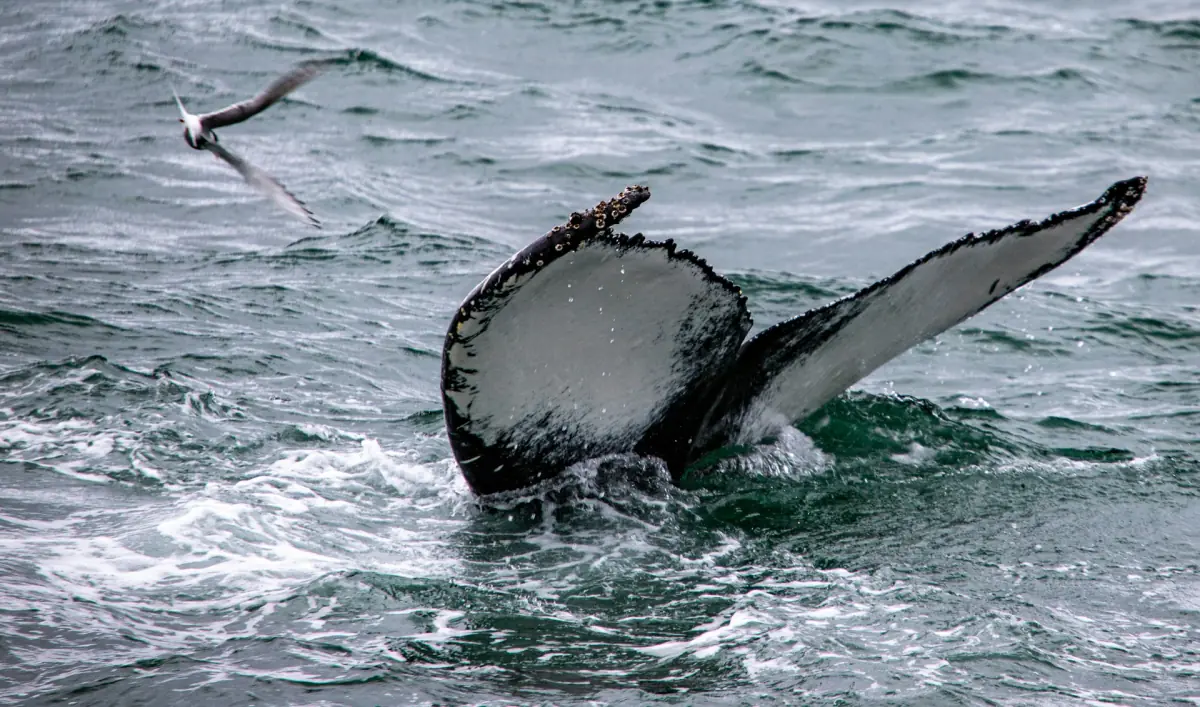
Humpbacks are an important part of the bay's whale watching, with individual encounters dependent on the animals. The same applies to how close an animal comes and what it does while visible. Keep the distinction between a general wildlife trip and a species-specific expectation in mind when comparing classic whale watching boats. A photograph of a breaching whale illustrates a possible encounter, rather than the content of every departure.

Historical sighting figures from the operator's 2024 trips
Faxaflói Bay's historical figures in Elding's January 2025 review describe that operator's trips in 2024: more than 90% were classed as successful. Humpbacks appeared on 78% of the assessed trips, minke whales on 44%, white-beaked dolphins on 36% and harbour porpoises on 23%. The measure concerns trips, rather than the percentage of visitors who saw an animal.
Success in this review meant sightings sufficient for the operator not to issue a free return ticket. The figures are an account of one company's year, rather than a present-day rate across Reykjavik. The same trip can involve different species, so read each percentage in its own context. Finn whales and orcas also appeared in the 2024 account; that observation does not turn either species into a predictable booking choice.
Boat trip and exhibition
Combine a guided trip on the bay with museum entry to explore whale models and exhibits.
Hand-picked tours, booked through GetYourGuide. Prices are indicative starting prices in euros (as of November 2026). Tap a tour for live availability and the current price in your currency.

Whale watching with a museum visit
Combine a guided boat trip with museum admission and a multilingual app to connect wildlife observations with the whale models ashore.
A museum visit adds context to Faxaflói sightings
Reykjavik's whale exhibition displays 23 life-size models, including toothed and baleen whales. The exhibition explains a wider range of animals than any individual boat trip is likely to encounter. A model in the museum is an interpretation of a species, rather than evidence that the species will appear during the next sailing.
The boat-and-museum combination includes a guided boat tour, thermal overalls in adult and children's sizes, Wi-Fi, museum admission and a multilingual app. German and English are among its languages. Hotel transfers and meals are separate from those inclusions. Use the exhibition as a learning component of the day, with the actual animal encounter taking place at sea. The departure planning guide helps distinguish the harbour meeting points.
An older welfare code for whale encounters
Faxaflói Bay wildlife watching can be understood through the IceWhale industry code published in 2016, an older voluntary standard rather than a national minimum-distance law. The code describes cautious parallel approaches, avoiding sudden course changes and avoiding passage through groups of animals. It also calls for leaving natural behaviour undisturbed.
The 2016 code discourages feeding, touching and swimming with whales or dolphins, as well as disturbing nesting or resting birds. Read those principles as the background to considerate observation, rather than an entitlement to a close approach. For seasonal bird outings, the puffin tour guide explains observation from boats without landing on the nesting islands.
Whale watching in Reykjavik or Húsavík
Reykjavik offers departures into Faxaflói, while Húsavík lies beside Skjálfandi Bay in North Iceland. The road distance quoted for Húsavík from Reykjavik is 463 km. Choose between them through the wider route of the journey, rather than treating Húsavík as another nearby pier for a Reykjavik afternoon.
Reykjavik has year-round Classic departures. The Húsavík traditional wooden-boat programme described for 2026 runs from 1 April to 30 November and takes about 3 hours, subject to weather changes. A northern itinerary can therefore make whale watching in Húsavík a relevant alternative. Geography, sailing season and boat type provide useful comparisons without declaring a statistical winner.
Faxaflói Bay questions
Which whales might a Reykjavik boat trip encounter?
Faxaflói Bay trips regularly advertise humpback and minke whales alongside white-beaked dolphins and harbour porpoises. The species encountered depend on the particular outing. Keep the whole wildlife experience in view, with expectations open to different species, viewing distances and animal behaviour during the outing.
What does the historical success rate describe?
The 2024 review describes Elding's own assessed trips, with more than 90% counted as successful because a free return ticket was not issued. The review was published in January 2025. Its result belongs to that operator and year, rather than every company or a future departure.
What does the whale museum show?
Reykjavik's whale museum presents 23 life-size models of toothed and baleen whales. The boat-and-museum combination includes museum admission and a multilingual app alongside the guided sailing. The exhibition supports learning about whales ashore; wildlife sightings take place on the boat trip and remain dependent on the animals.